
Your wallet application finds them all, totals the amount, and displays it. Bitcoin operates without a financial system or government authorities and doesn’t require the involvement of financial institutions. It can be used as an alternative to fiat currencies or as an investment, utilizing peer-to-peer transfers on a digital network that records and secures all transactions. This network is powered by a blockchain, an open-source program that chains transaction histories to prevent manipulation.
Bitcoin Security
After nearly nine months of trading, the data reveals that Bitcoin ETFs are making history and could very well be the catalyst needed to propel Bitcoin to even greater heights. Wallets are the weak spot, so if you’re looking to get involved in Bitcoin, it’s essential to understand how to utilize cold storage methods and keep your keys out bitcoin mining history of your hot wallet. Historically there has been a significant increase in the price of Bitcoin (BTC) between each Bitcoin halving event (around a four year period give or take a little). The first point I’d like to clarify is that the term “Bitcoin halving” does not indicate a bitcoin halve in value, or that the price will be cut in half.
- This surge in value attracted an influx of new miners and investors, further intensifying the competition for mining rewards and accelerating the development of new technologies.
- Our partners cannot pay us to guarantee favorable reviews of their products or services.
- Another critical area of innovation was the integration of renewable energy sources into mining operations.
- All bitcoin transactions are validated by miners, who use high-powered computers to solve complex mathematical puzzles and create new blocks of verified transactions on the blockchain.
- While the Lightning Network primarily aimed to improve the transaction throughput and scalability of the Bitcoin network, it also introduced a new incentive model for miners.
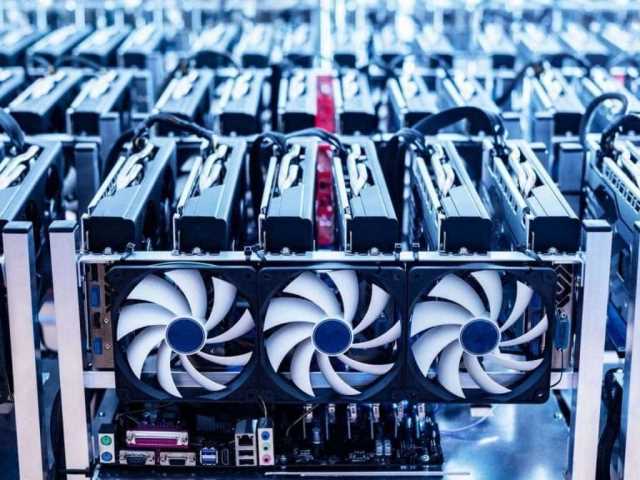
- So it’s not surprising that video cards soon relegated CPU processors to the background.
Best Crypto Wallets: Top Picks for 2024

Many miners now use custom mining machines, called Application-Specific Integrated Circuit (ASIC) miners, equipped with specialized chips for faster and more efficient Bitcoin mining. They cost anywhere from several hundred to tens of thousands of dollars. Today, Bitcoin mining is so competitive that it can only be done profitably with the most up-to-date ASICs. But even with the newest unit at your disposal, one is rarely enough to compete with mining pools and large Bitcoin mining operations.
What Is Bitcoin Mining? How to Get Started
- The event is significant for its role in maintaining Bitcoin’s predetermined supply cap and its potential influence on the cryptocurrency’s market dynamics.
- This event served as a reminder of Bitcoin’s finite supply and the increasing scarcity of mining rewards, further emphasizing the need for efficiency and innovation in the industry.
- The premium that early users received and Nakamoto’s silence after 2011 led to criticism of Bitcoin as a Ponzi scheme, with Nakamoto benefiting as one of the first users.
- This continues until a hash that is less than the target hash is generated.
- So, we’d suggest dialing your Delorean’s date display to 2010 – and bring pizza.
- FPGAs soon gave way to application-specific integrated circuit (ASIC) systems, and Bitcoin went from hobby to industry.
The Bitcoin network aims to produce one block every 10 minutes or so. The system is designed to evaluate and adjust the mining difficulty every 2,016 blocks or roughly every two weeks (based on the number of participants). This doesn’t always result in a blocktime of 10 minutes, but it’s close. Mining is a complex process, but in a nutshell, when a transaction is made between wallets, the addresses and amount are entered into a block on the blockchain.
How Much is Bitcoin Worth Today?
Digiconmist estimates that the amount of e-waste created annually is 27.66 kilotons. Miners make these guesses by adjusting the nonce, which is part of the information being hashed. Nonce is short for “number only used once,” and it is the key to generating these 64-bit hexadecimal numbers. This counter comes from the coinbase transaction field, which is much larger—it is called the extra nonce.
How Much was 1 Bitcoin Worth in 2012?
There are some — including Monero — that can be mined using a home computer. Others require ASICs, and some rely on GPUs — “graphics processing units” originally developed for gaming and other heavy-duty applications. There are, however, efforts to mitigate this negative externality by seeking cleaner and green energy sources for mining operations (such as geothermal or solar sources) and utilizing carbon offset credits. It may be a good idea to research your country’s regulatory stance and overall sentiment toward cryptocurrency before investing in mining equipment.
Russians are using crypto to evade sanctions — but it’s not just the elite
- The Motley Fool reaches millions of people every month through our premium investing solutions, free guidance and market analysis on Fool.com, top-rated podcasts, and non-profit The Motley Fool Foundation.
- Each time 210,000 blocks of transactions are added to the bitcoin blockchain, the network automatically undergoes a process known as halving.
- For instance, a processing card that you can purchase for a couple of thousand dollars would represent less than 0.001% of the network’s mining power.
- Users must take their own steps to verify the accuracy, completeness or currency of the Information and make their own determination as to the relevance of the Information.
- To this day, many video cards continue to mine ethereum because the cost of mining is still less than the profits generated.
- Yet, even in those early days, there were significant innovations within the realm of CPU mining that laid the groundwork for the mining landscape as we know it today.
For instance, Iceland emerged as a popular destination for mining operations due to its abundant geothermal and hydroelectric power resources, as well as its cold climate, which helps to reduce cooling costs[17]. Between 2016 and 2020, the Bitcoin mining landscape underwent several significant innovations and developments that would once again reshape the industry. As the network’s hashing power continued to grow, the need for increased efficiency, sustainability, and decentralization became more evident, prompting a series of remarkable technological advancements. In the early days of Bitcoin, mining was a relatively simple process that could be done using a regular computer’s CPU.
Bitcoin All Time High in CAD
After expending all the effort and cost to mine a block, you might be averse to the risk of losing your potential payout by, say, inserting inaccurate data about the Bitcoin in your account. While Bitcoin mining has a good track record for reliability, it has also attracted its share of criticism because of the energy needed to run the network. A number of cryptocurrencies have been moving away from mining, though Bitcoin continues to rely on the process. Finally, there was a way for the little people to make money using the magic of cryptography and blockchain. It was time for everyone to quit their jobs, plug in a bunch of fairly-affordable mining rigs, and drink pina coladas on the beach. More importantly, in October 2010 the code for mining bitcoin with GPUs was released to the general public.
A fork, referring to a blockchain, is defined variously as a blockchain split into two paths forward, or as a change of protocol rules. Accidental forks on the bitcoin network regularly occur as part of the mining process. This fork is subsequently resolved by the software which automatically chooses the longest chain, thereby orphaning the extra blocks added to the shorter chain (that were dropped by the longer chain). Bitcoin mining is also controversial because it uses astronomical amounts of energy.
]]>
Oddly, even while it has largely failed in its original purpose of facilitating transactions, Bitcoin has become a financial asset. Many investors seem to believe that it is a secure investment because of its scarcity. Unlike fiat currencies such as the dollar that can be printed at will by central banks, the computer algorithm that manages Bitcoin limits its total issuance to 21 million bitcoins (about 18.5 million have been created so far). To base the value of an asset, which has no intrinsic use, just on scarcity seems a dubious proposition. But that has not stopped investors from pouring money in, creating a massive speculative bubble. The total market value of all cryptocurrencies is now a stunning $2 trillion.
- While industry experts offer various predictions and opinions, the market dynamics and external factors will ultimately shape Bitcoin’s trajectory.
- The simple answer to this question is “because it was designed that way.” Well, but why can’t this limit be extended?
- As I write this, Bitcoin’s market price stands 62% below the all-time high of November 2021.
- He expects the price to go up “forever,” with some volatility along the way but a reliably positive trend in the long run.
- In 2024, the majority of Bitcoins are still out in the wild, so to speak.
- Over the years, Bitcoin’s price has experienced extreme volatility, leading to various predictions and speculations about its future.
The History of Bitcoin: From A Cypherpunk Experiment to an Emerging Reserve Asset”
After the meteoric rise to over $1,000 in late 2013, Bitcoin faced a significant downturn. This was partly due to regulatory concerns and the infamous Mt. Gox exchange hack. By early 2015, Bitcoin’s price had fallen to around $200, leaving many to question the future of the cryptocurrency. In 2016, Bitcoin’s second ‘halving’ occurred, further limiting the supply of new coins and providing Bitcoin future development upward pressure on the price. Throughout 2017, Bitcoin experienced unprecedented growth, with its price hitting $1,000 in January before catapulting to nearly $20,000 by December. This rise was fueled by a surge in interest from retail and institutional investors alike, with Bitcoin increasingly viewed as a potential hedge against traditional financial instability and a store of value.

Bitcoin Price Prediction 2029
- As a result, if Bitcoin had been then to completely replace fiat, 1 BTC would have been worth $1M, and one satoshi — $0.01.
- In my opinion, the crash of the end of the year was caused firstly by experienced traders selling close to the top and causing a small drop in price.
- There are some prominent figures in the financial and investment world who believe that Bitcoin could reach $1 million.
- The Trump administration could foster a favorable environment for Bitcoin and other digital assets through more relaxed regulations.
The world’s largest cryptocurrency, BTC, which was on a recovery path, has increased around 76.83% in one year. As of August 5, 2024, it is currently trading at $51,502, with a market capitalization of $1.04 trillion and a global cryptocurrency market capitalization of $1.86 trillion. Thanks to its strong launch ProShares’ BITO has a 90% market share among bitcoin futures funds. It has no plans to retire its Bitcoin Strategy ETF (BITO), which has $2 billion in assets, or convert it to a spot offering.
October 2024: Bitcoin Price Forecast
2019 brought a partial recovery, with Bitcoin’s price climbing back up to around $10,000. Then came 2020, a pivotal year for Bitcoin marked by the third ‘halving’ event in May. This halving reduced the block reward from 12.5 to 6.25 Bitcoin, further decreasing the supply of new coins. Sciberras says on the negative side of the ledger, there are concerns over bitcoin’s long-term security, given the block reward will continue to decrease.
Will Bitcoin reach 1 million?
Decentralized finance applications and businesses that hold private keys for their customers are generally the primary targets. The blockchain itself remains secure, but it is the interfaces used to access keys and the blockchain that are the issues. In 2024, the majority of Bitcoins are still out in the wild, so to speak. But, these large https://www.tokenexus.com/ entities will likely keep growing their holdings over time—and if they continue to be treated as a speculative investment and store of value. Bitcoin (the cryptocurrency) is thus likely to become more centralized as its future supply dwindles. BitDegree aims to uncover, simplify & share Web3 & cryptocurrency education with the masses.
- Rather, everyone will have to pay fees to move Bitcoin due to the fact it will be the most widely accepted global money.
- Decentralized finance applications and businesses that hold private keys for their customers are generally the primary targets.
- If a cryptocurrency can change the rules that govern its asset or network, monetary maximalists argue the system is centralized.
- Since then it has amassed about $2.5 billion of assets as of January 10 of this year, the day the SEC permitted 10 spot ETFs to begin trading.
- Her predictions hinge on various factors, including the increased adoption of Bitcoin as a store of value and the impact of technological and financial developments on its valuation.
Learn to gain real rewards